


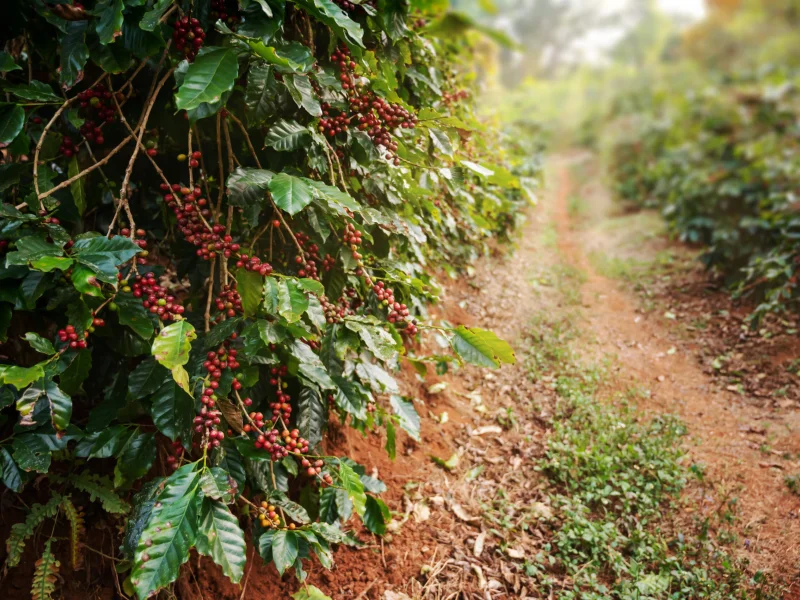
Coffee cultivation: how altitude influences flavor
When we talk about quality coffee, we often hear terms like "bright acidity," "fruity notes," or "floral aroma." But what few realize is that many of these characteristics stem directly from the altitude at which the coffee was grown. Yes, the altitude of the land where the plant grows has a huge influence on the final flavor of the beverage.
Why does altitude matter so much when growing coffee?
Altitude directly influences the region's climate. In higher altitudes, temperatures are naturally lower, causing the coffee to ripen more slowly. With slower ripening, the coffee bean has more time to develop sugars and compounds that result in more complex flavors and more intense aromas. When the bean ripens slowly, it concentrates more flavor. This is different from what happens in warmer, lower-altitude regions, where coffee grows and ripens faster. Under these conditions, the flavor tends to be simpler, with less acidity and a smaller variety of aromas. Altitude also directly affects bean density. Coffees grown at higher altitudes are generally denser, and dense beans tend to be of higher quality. They withstand the heat of roasting better and, therefore, reveal more nuances in the cup.
What changes in the flavor of coffee according to altitude?
At higher altitudes, above 1,200 meters, for example, coffee tends to have a more pronounced acidity, but don't confuse it with a sour taste. This acidity is that pleasant sensation reminiscent of citrus fruits, berries, sometimes even wine or flowers. Furthermore, coffees from higher altitudes tend to have a very present natural sweetness, which doesn't require sugar to please the palate. At intermediate altitudes, between 800 and 1,200 meters, coffee tends to have a good balance between sweetness and acidity, with milder notes and a medium body. Flavors reminiscent of chocolate, nuts, and dried fruits can be found there. In coffees grown at lower altitudes, below 800 meters, the sensory profile tends to be simpler. The flavor is more direct, with little acidity, but with good body and a more pronounced sweetness. In these cases, chocolatey and caramel notes predominate, which can also appeal to those seeking a fuller-bodied, less acidic beverage. These differences aren't rules, as other factors also come into play, such as soil type, coffee variety, processing method, and even roasting. But altitude is undoubtedly one of the most important factors in shaping a coffee's flavor.
And why is high-altitude coffee so valued?
Coffees grown at higher altitudes tend to have a more sophisticated sensory profile, with multiple layers of flavor and aroma. It's the type of coffee that, upon sipping, reveals notes of fruit, flowers, honey, dark chocolate, and more. Furthermore, cultivation in high-altitude regions requires more care. Access conditions are often more difficult, and the risks of extreme weather are greater. All of this increases production costs, but also enhances the quality and exclusivity of the product. Therefore, high-altitude coffees tend to receive higher scores in competitions and are more highly valued in the specialty coffee market.
The concept of terroir in coffee
Just like wine, coffee is also influenced by a set of local factors known as terroir. This term refers to the geographic, climatic, and human characteristics that define the sensory profile of an agricultural product. In the case of coffee, terroir encompasses altitude, soil type, regional climate, plant variety, and even harvesting and processing methods. When the producer understands their terroir well and works carefully at each stage, the result shines through in the cup. Two coffees of the same variety grown in different regions, at different altitudes, can have completely different flavors.
High-altitude coffee-producing regions
Several regions in Brazil and around the world are known for producing coffee at high altitudes. In Brazil, for example, we have areas like Mantiqueira de Minas and Southern Minas Gerais, which are located between 1,000 and 1,300 meters above sea level. Coffees from these regions are known for their balance of sweetness, acidity, and aroma. In Colombia, the Andes Mountains offer ideal altitudes for coffees with citrus and floral notes. In Ethiopia, the birthplace of Arabica coffee, regions like Sidamo and Yirgacheffe reach altitudes of 2,000 meters, resulting in extremely aromatic and complex coffees. If you hadn't already considered this, now you know: altitude is one of the most important factors in defining a coffee's flavor. It influences the bean's maturation time, sugar formation, acidity, sweetness, aromas, and even bean density. And all of this directly impacts the quality of the beverage that reaches your cup. We believe that understanding where the grain comes from, how it was grown, and how it was treated is essential to offering a superior beverage. If you value quality and flavor, know that altitude does make all the difference.